
The Next Wave of Urban Development in South Florida: The Rise of Suburban Downtowns
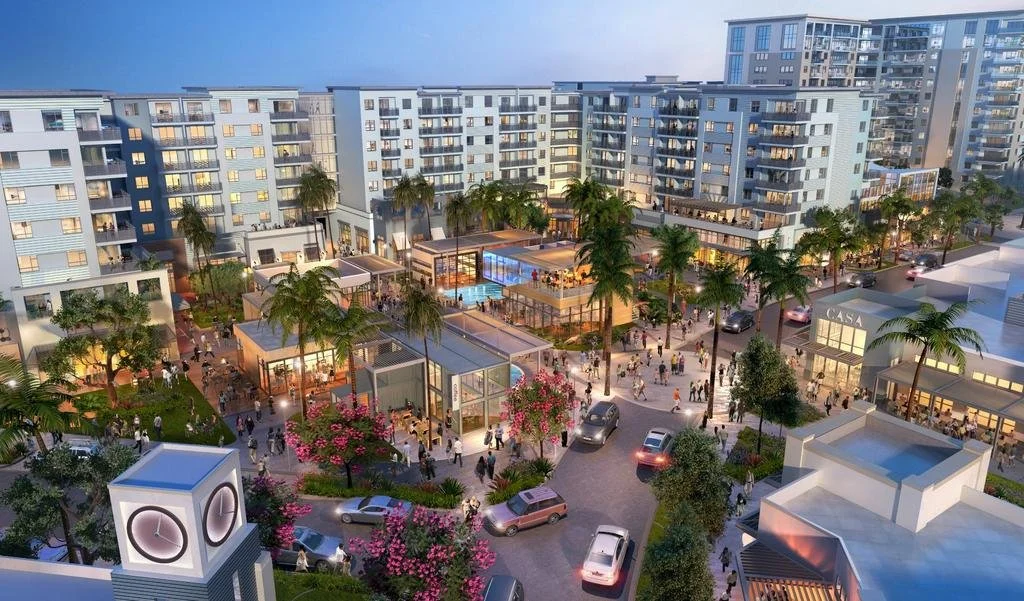
For decades, South Florida's growth has been defined by sprawling suburbs, shopping centers, and single-use developments connected by major roadways. Today, that model is rapidly evolving.
Across Miami-Dade, Broward, and Palm Beach counties, a new generation of mixed-use developments is transforming underutilized shopping centers, aging retail plazas, and oversized commercial parcels into vibrant, walkable destinations. Instead of driving into downtown Miami, Fort Lauderdale, or West Palm Beach for dining, entertainment, or work, residents are increasingly finding everything they need in their own communities.
Welcome to the era of the suburban downtown.
From Shopping Centers to Community Destinations
Many shopping centers built in the 1970s, 80s, and 90s were designed around big-box retailers and expansive parking lots. As retail habits have changed and e-commerce has grown, these properties have become prime candidates for redevelopment.
Rather than simply replacing old buildings with new retail, developers are creating entire neighborhoods that combine: Multifamily residential homes, restaurants and cafés, boutique retail spaces, office space, hotels, public gathering spaces, parks and pedestrian plazas, and entertainment venues
The result is a true live-work-play environment that serves as a community hub instead of just a shopping destination. This shift mirrors a national trend of redeveloping aging retail properties into walkable town centers while addressing growing demand for housing and mixed-use communities.
Think about it: where do you live? If the answer is a suburban community, wouldn’t you rather drive five minutes to your local “downtown,” park once, and spend the afternoon walking around, grabbing dinner, meeting friends, or enjoying time with your kids? That’s the appeal of these new suburban hubs. They bring the energy and convenience of an urban downtown closer to home.
Developments like Dania Pointe and Plantation Walk are strong examples of this approach in South Florida. Rather than functioning as traditional shopping centers, these destinations are designed to give surrounding communities places to gather, dine, shop, work, and spend time—all without having to make the trip into a major downtown.
Why South Florida Is Seeing This Shift
Several market forces are driving this new wave of urban redevelopment in South Florida.
Population Growth: South Florida continues to attract new residents and businesses from across the country. As available land becomes increasingly scarce, redevelopment often makes more sense than building on undeveloped sites.
Demand for Walkability: Today's residents want convenience. They want to walk from their apartment to a coffee shop, fitness studio, restaurant, or office without getting in their car. Walkable neighborhoods consistently attract both residents and businesses, making them highly desirable for long-term investment.
This demand is particularly interesting in South Florida, where a significant influx of residents has come from cities such as New York, Chicago, and Los Angeles. For people accustomed to urban neighborhoods where restaurants, shops, entertainment, and everyday amenities are just a short walk away, the traditional suburban model can feel limiting. Creating a centralized “hub” within these communities offers a way to bring some of that urban lifestyle to the suburbs.
Hybrid Work Has Changed Commercial Real Estate: As remote and hybrid work become more common, suburban communities are seeing increased daytime activity. Mixed-use developments create destinations where people can work remotely, meet clients, shop, dine, and socialize all in one location.
Better Use of Existing Land: Large parking lots and underutilized commercial properties represent valuable real estate. Redeveloping these sites helps communities grow without expanding farther outward, creating more efficient land use while supporting local economic development.
The Return of the Neighborhood Downtown
One of the most interesting aspects of this trend is that many suburbs are creating something they never truly had—a downtown.
Instead of a traditional central business district, these communities are developing walkable centers where people naturally gather for dining, shopping, events, and everyday life.
South Florida has already seen successful examples of this concept. Mizner Park in Boca Raton transformed an obsolete shopping mall into a thriving mixed-use destination and helped redefine the city's downtown experience. Las Olas Boulevard in Fort Lauderdale offers another example of a walkable, pedestrian-friendly district where restaurants, shops, offices, residences, and entertainment come together to create a true neighborhood destination. CityPlace in West Palm Beach similarly helped establish a mixed-use urban center with dining, retail, entertainment, offices, and residential development.
Today, similar redevelopment strategies are being planned throughout the region as shopping malls and aging retail centers evolve into mixed-use neighborhoods with housing, offices, hospitality, and entertainment.
What This Means for Commercial Architecture
These projects require a different approach than traditional commercial development.
Successful mixed-use communities must carefully balance architecture that creates a memorable sense of place, pedestrian-friendly streetscapes, flexible commercial spaces, integrated parking solutions, outdoor gathering areas, and long-term adaptability as community needs evolve.
Design is no longer just about individual buildings—it’s about creating an experience that encourages people to stay longer, return often, and build community.
This is where thoughtful commercial architecture, master planning, and urban design become essential.
Looking Ahead
The future of South Florida commercial development isn't just about building more—it’s about building smarter.
As aging shopping centers and underutilized commercial properties continue to be reimagined, we'll see more suburban neighborhoods develop their own identity through vibrant, mixed-use districts that blend residential, retail, office, and public space into one cohesive destination.
For property owners, developers, municipalities, and investors, these projects represent an opportunity to unlock the full potential of existing land while creating lasting value for the communities they serve. But creating the “hub” is only part of the equation. If South Florida wants these new suburban downtowns to truly function like the urban neighborhoods they are inspired by, transportation needs to be part of the conversation. People need more ways to get to these destinations beyond the car. Better sidewalks, bike infrastructure, public transit, and connected neighborhoods can help make these districts truly accessible—and allow more people to take advantage of everything they have to offer.
The goal shouldn't simply be to create places people want to visit. It should be to create places people can easily reach, navigate, and make part of their everyday lives.
At Peacock Architects, we believe great design begins with understanding how people live, work, and connect. As South Florida continues to evolve, thoughtful planning and innovative architecture will play a critical role in shaping the next generation of thriving suburban downtowns.